Case study: Piper
From the track to trust
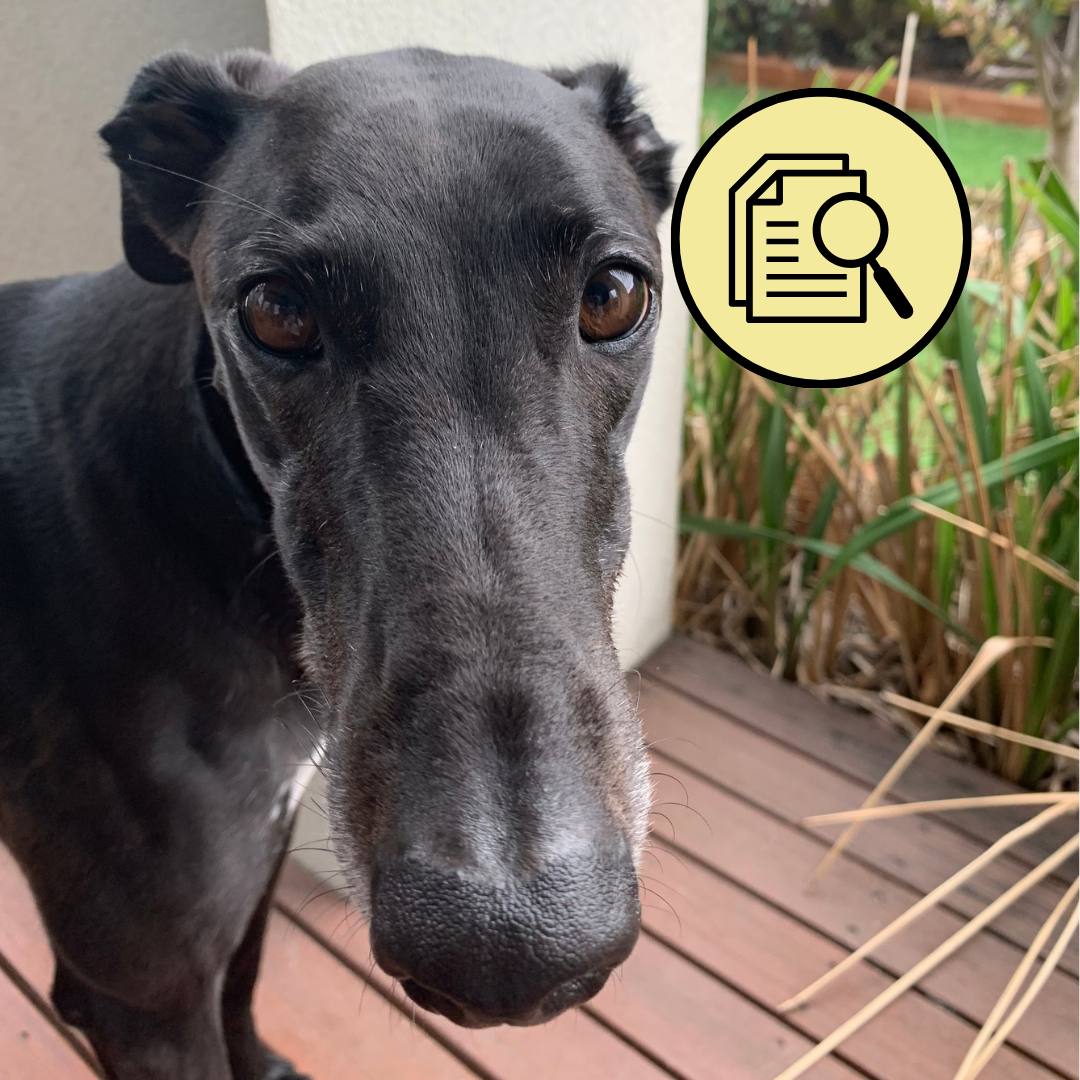
When Piper first stepped off the transport truck in November 2025, she carried with her five years of life experience, but almost none of it prepared her for suburban living. Like many retired greyhounds, Piper had spent her entire racing career in a structured, predictable environment. She knew the sound of the starting gate, the feel of the track beneath her paws, and the rhythm of kennel life. What she didn’t know was how to walk on floorboards, what a microwave was, or why humans kept opening and closing doors for no apparent reason.
Piper had earned around $45,000 during her racing years, but she arrived in her new home with an old front‑leg injury, arthritis, and a heart full of uncertainty. She was one of five pups in her litter, all racers, and like many greyhounds, she had never lived inside a home. The suburban world was overwhelming from the moment she arrived.
The challenges Piper faced
Piper’s new family quickly realised that adopting a retired greyhound isn’t the same as adopting a typical pet dog. She was frightened of people, including the very humans who wanted to love her. Everyday household sounds, microwave beeps, doors closing, the vacuum, sent her scrambling for safety. She had never been toilet trained. She didn’t know how to get into a car, let alone ride in one.
Her behaviours weren’t stubbornness or disobedience, they were the natural result of sensory overload and a lifetime without early socialisation. And while her family had adopted greyhounds before, Piper’s fearfulness was unlike anything they had experienced.
This is where professional guidance becomes essential.
Building trust, one choice at a time
When Piper’s family reached out for help, the first priority was simple: create safety.
Using positive reinforcement and force‑free methods, we focused on helping Piper feel in control of her world. No forced pats. No pressure to ‘be brave.’ Instead:
family members tossed treats rather than offering hands
visitors respected her space
everyone used soft, slow body language and calm voices
Piper chose when to approach, when to retreat, and when she was ready for more.
Slowly, she began to stay in the same room as her humans. Then she started sniffing clothing. Eventually, she approached with curiosity rather than fear. Trust was growing.
Helping Piper understand the world
Once Piper felt safer with her people, we expanded her comfort zone.
Household noises
We introduced sounds at low intensity, paired them with a friendly cue (‘friend’) and a marker (‘yes’), followed by a treat. Over time, Piper shifted from fleeing to simply glancing toward the noise before returning to her activity. A huge win.
Car confidence
We shaped tiny steps: looking at the car, approaching it, placing a paw on the scuff plate, stepping inside, and finally taking short, calm rides. Each step was reinforced. Each success built confidence.
Toilet training
With frequent outdoor opportunities, supervision, and immediate reinforcement, Piper learned the routine. Accidents decreased. Predictability increased. Stress eased.
Supporting the humans, too
Piper’s journey wasn’t linear. Her fear responses were unpredictable. Her arthritis sometimes limited training sessions. Her family experienced moments of doubt, exhaustion, and emotional overwhelm. They even discussed returning her more than once.
This is a normal part of adopting a dog with a complex history, and it’s why professional support matters just as much for the humans as for the dog.
We provided:
education about greyhound adjustment patterns
reassurance that slow progress is still progress
clear written plans
regular check‑ins
celebrations of every small win.
Training isn’t just about behaviour. It’s about perspective, patience and partnership.
Where Piper is now
Piper’s story is still unfolding, but her transformation is already remarkable. She now:
greets new people with cautious optimism
handles household noises with far less fear
enters the car with growing confidence
has reliable toilet habits
invites belly rubs
shows playful behaviours, running, tossing toys, and even inviting her humans to join in.
She’s not ‘finished,’ because rescue dogs don’t come with finish lines. But her trajectory is beautifully positive.
Why Piper’s story matters
Piper is a perfect example of why adopting a rescue dog, especially a retired greyhound, can be both challenging and deeply rewarding. These dogs aren’t broken. They’re inexperienced. They’re learning an entirely new world, often for the first time at four, five, or six years old.
With patience, structure, and the right training support, dogs like Piper don’t just adapt, they flourish.
If you’re considering adopting a greyhound or you’re already navigating the early stages with a new rescue, Piper’s journey shows what’s possible. And if you need guidance, you don’t have to do it alone. This is exactly what my training practice is here for: helping dogs feel safe, helping families feel confident, and helping both sides build a relationship rooted in trust.
A huge thank‑you to Greyhound Adoption Program (GAP) for the incredible work they do giving retired racers a second chance. If you’re able, please support them so they can continue changing lives like Piper’s at www.gapgreyhounds.org.au.
Did you know that we offer a 20% discount for rescue dogs?
This is for ALL training sessions, not just the first one.
Contact us to talk about your rescue and the training they need.