
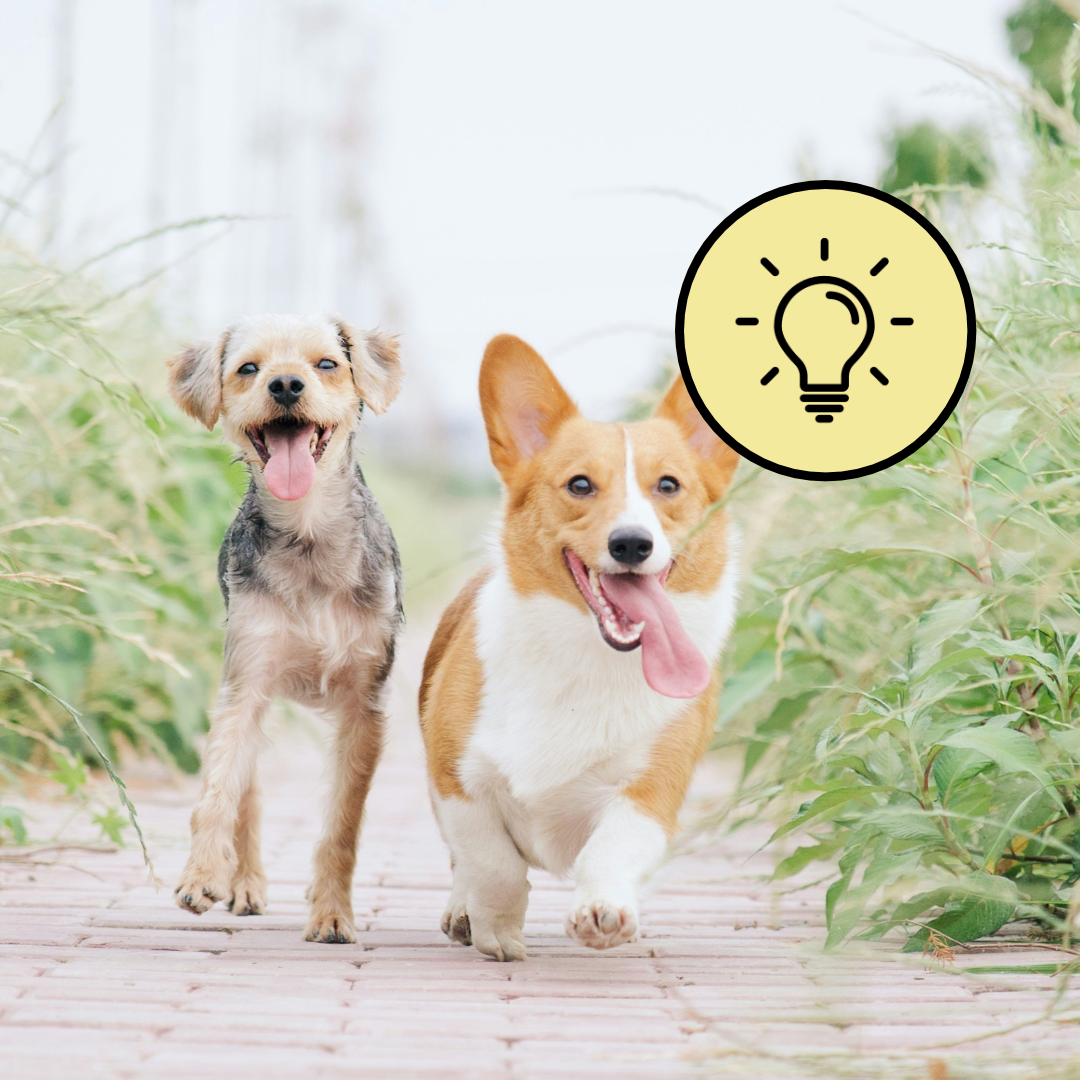
If you’ve ever lived with more than one dog, you already know this: no two are the same.
One barrels through the door like it’s the best day of their life. Another hangs back and watches the room for a few minutes first. Neither is wrong. They’re just different dogs.
That difference is personality, and it shapes almost everything about how your dog learns, copes and communicates.
Personality is more than breed
Breed gives us a rough starting point. A kelpie is likely to have plenty of drive, and a retriever will probably want something in their mouth. But breed is a tendency, not a guarantee. Plenty of border collies are anxious about new things, and plenty of Labradors would rather watch than fetch.
What matters more is the individual. Is your dog bold or cautious? Social butterfly or selective about their company? Do they bounce back quickly from a fright, or does it stay with them for the day? Knowing this helps you set realistic expectations, and it takes some pressure off both of you.
How dogs communicate
Dogs don’t have words, so they use their whole bodies. The details are small, which is why they’re so easy to miss:
Ears and eyes. Ears pinned back, a hard stare, or the whites of the eyes showing (often called whale eye) can all signal discomfort.
Mouth. Lip licking, yawning out of context and a tightly closed mouth often mean a dog is feeling stressed, not tired or relaxed.
Tail. A wag means a dog is aroused or engaged, not necessarily happy. Height and speed matter. A stiff, high, fast wag is a very different message to a loose, sweeping one.
Body weight. Leaning away, crouching low or freezing completely are all ways of saying “I’m not sure about this.”
No single signal tells the whole story. Context counts, and so does the dog in front of you.
Quiet dogs and loud dogs
This is where personality and communication meet.
Some dogs are expressive. They tell you early and clearly when something’s too much, and that’s useful information. Others are quieter. They tend to go still, look away or simply put up with things until they can’t any more. When one of these dogs finally snaps or bolts, it can look like it came out of nowhere. Usually the signals were there for a while. They were just subtle.
Then there’s the dog whose early signals get ignored, so they learn to skip the polite stuff and go straight to a bark, a lunge or a growl. That’s not a “bad” dog. It’s a dog who learned that whispering didn’t work.
Either way, the aim is the same: notice the small things, respond to them, and your dog learns that communicating works.
What this means for training
A confident, pushy dog and a sensitive, worried dog need different things, even when the behaviour on the surface looks similar. A bold dog may need clear structure and good outlets for their enthusiasm. A cautious dog might need more distance, more time and plenty of choice.
This is exactly why force-free training makes sense. Rather than applying the same method to every dog, we start by understanding the one in front of us and build on what they’re already offering. It tends to protect trust, which matters whatever your dog’s personality.
A small thing to try this week
Pick one calm moment and just watch your dog for five minutes. Don’t train, don’t correct, just notice. How do they hold their ears? What do they do when someone walks past the window? You might be surprised by how much they’re already telling you.
If you’d like help reading your dog, or you’ve got a behaviour that’s puzzling you, we’d love to chat. We work with dogs and their people in your own home, on the Mornington Peninsula.